
Criminal Cases in the White Pine County Courts
White Pine County criminal cases do not all begin or end in the same office. The Ely Justice Court handles criminal and misdemeanor matters within its jurisdiction and the preliminary phase of many felonies. A felony may start there with an initial appearance and probable-cause work before the prosecutor files an information in the Seventh Judicial District Court. The District Court then holds the felony file, including later post-conviction proceedings.
Ely Municipal Court separately handles city traffic cases and misdemeanors, including DUI and domestic battery matters. Its file is not merged into the District Court index. The White Pine County Clerk maintains District Court files, while the Justice and Municipal clerks answer for their own dockets. Identifying the court is the first real search step.
Which White Pine Court Holds Cases?
The charge level and where the alleged conduct occurred guide the search. A city citation may point to Municipal Court. Justice Court handles its own criminal jurisdiction and felony preliminary work. Filed felonies belong at District Court. The official contacts below help prevent a request from landing at the wrong counter.
| Court or clerk | Criminal role | Contact |
|---|---|---|
| Seventh Judicial District Court | Felonies and post-conviction matters | 775-289-7887; Department 2, 775-293-6560 |
| White Pine County Clerk | District Court case files | 801 Clark St., Suite 4; 775-293-6509 |
| Ely Justice Court | Misdemeanors and felony preliminary stages | 1786 Great Basin Blvd., Suite 6; 775-293-6540 |
| Ely Municipal Court | Ely traffic and city misdemeanors | 1786 Great Basin Blvd.; 775-289-7840 |
The Nevada Judiciary's White Pine County Clerk listing is a useful official check before contacting the District Court clerk. Ask the receiving clerk to redirect the request if the cited court name does not match its files.
How to Search Case Records
No verified public White Pine County trial-court name-search portal was found. The dependable route is a focused clerk request. Start with the court shown on a citation, release paper, or prior docket. If that is unknown, the alleged offense level and place can help a clerk route the inquiry.
- Choose District, Justice, or Municipal Court based on the filing venue, not merely the arresting agency.
- Give the clerk the full defendant name, case number if known, and an approximate filing or arrest year.
- Ask first for the docket or register of actions so the case and key document dates can be confirmed.
- Name the documents needed, such as the complaint, judgment, sentencing order, or dismissal.
- Ask whether inspection, a plain copy, an electronic copy, or a certified copy is available and confirm the current fee.
Justice Court accepts filings by fax, email, and mail, but that does not prove every criminal-copy request can use each filing channel. Confirm the request method with the clerk.
White Pine Case Request Fields
Because there is no public local trial portal, these are practical identifiers to give a clerk, not mandatory web-form fields. More precise details reduce the chance of confusing people with similar names or asking the wrong court to search an archive.
| Field | Type | Required | Use |
|---|---|---|---|
| Full defendant name | Text | Practical unless case number supplied | Add a middle name or initial if known |
| Case number | Text | Optional | Strongest identifier; preserve punctuation |
| Approximate filing or arrest year | Number or text | Optional | Narrows an archive search |
| Date of birth | Date | Ask clerk | May aid matching, but may be restricted |
| Court level | Choice | Needed for routing | District, Justice, or Municipal |
| Requested document | Text | Yes for copies | Docket, complaint, judgment, or other named filing |
| Copy format | Choice | Optional | Inspection, plain, certified, or electronic if offered |
Note: The official District Court fee schedule does not establish copy prices for Justice or Municipal Court records.
What the Case File Shows
A White Pine County case file records what prosecutors filed and what the court did. It may contain a complaint, information, or indictment, plus motions, minutes, plea papers, rulings, the judgment, and sentencing records. The docket is the chronological index. The signed judgment or dismissal is usually the key document when the final outcome matters.
| Case number and court | Identifies the venue, department, and file that should be cited in later requests. |
|---|---|
| Charging document | Lists the offense the prosecutor filed, its statute, and its level. |
| Docket entries | Track filings, hearing minutes, motions, warrants, and later case activity. |
| Arraignment and plea | Record the formal plea and early orders on bail or release. |
| Disposition and judgment | Show dismissal, acquittal, plea, verdict, and the court's final ruling. |
| Sentence and later events | May include custody, probation, restitution, revocation, appeal, or post-conviction filings. |
Sensitive identifiers, victim or minor details, sealed filings, presentence reports, medical evaluations, and some addresses or financial data may be redacted or unavailable.
White Pine Arrest and Filed Charges
A booking charge reflects what officers and jail staff recorded near the arrest. It is not necessarily the charge that reaches a White Pine County court. The prosecutor may decline a count, amend it, or file a different offense after reviewing the report. Match the booking entry to the court case number, then read the filed charging paper and final judgment.
This distinction explains why an old arrest entry can disagree with a court docket without either record being false. For more on the earlier stage, the county arrest history process explains the Sheriff report and booking trail. For a conclusive court result, request the judgment or dismissal from the clerk.
Stages of a Criminal Case
A White Pine County felony commonly moves from an arrest or citation to an initial appearance and bail review in Justice Court. An information or indictment places the filed felony in District Court. Arraignment records the plea. Pretrial litigation may address discovery, suppression, competency, bail, or dismissal before a negotiated plea or trial.
Case flow: Charges Filed → Arraignment → Pretrial → Plea or Trial → Disposition → Sentencing
Later entries can concern restitution, probation review or revocation, a corrected judgment, habeas or other post-conviction relief, and appeal. A docket should be read through its most recent event rather than stopping at the first outcome-like entry.
Reading White Pine Case Outcomes
Disposition terms describe different events. A dismissal ends a charge without conviction, but it does not by itself erase the arrest or booking record. An acquittal or not-guilty verdict is a decision in the defendant's favor. A guilty entry follows a plea or verdict. An amended charge means the final conviction may differ from what appeared at booking.
- Dismissed
- The charge ended without a conviction.
- Acquitted
- The court or jury resolved the charge in the defendant's favor.
- Amended
- The filed or final count changed from an earlier allegation.
- Remanded
- An appellate court returned the matter for more trial-court action.
Deferred or suspended proceedings require the final closure entry and governing statute before anyone calls the case dismissed. An appellate mandate can also alter an earlier result.
White Pine Appeals and Federal Cases
The Nevada Appellate Courts Case Search covers Supreme Court and Court of Appeals dockets. It does not replace the three White Pine County trial clerks. Use it only after a local case reaches an appellate court, then return to the trial clerk for the underlying complaint, exhibits, and judgment.
The official PACER gateway serves federal court records, which are a separate layer from White Pine County cases.
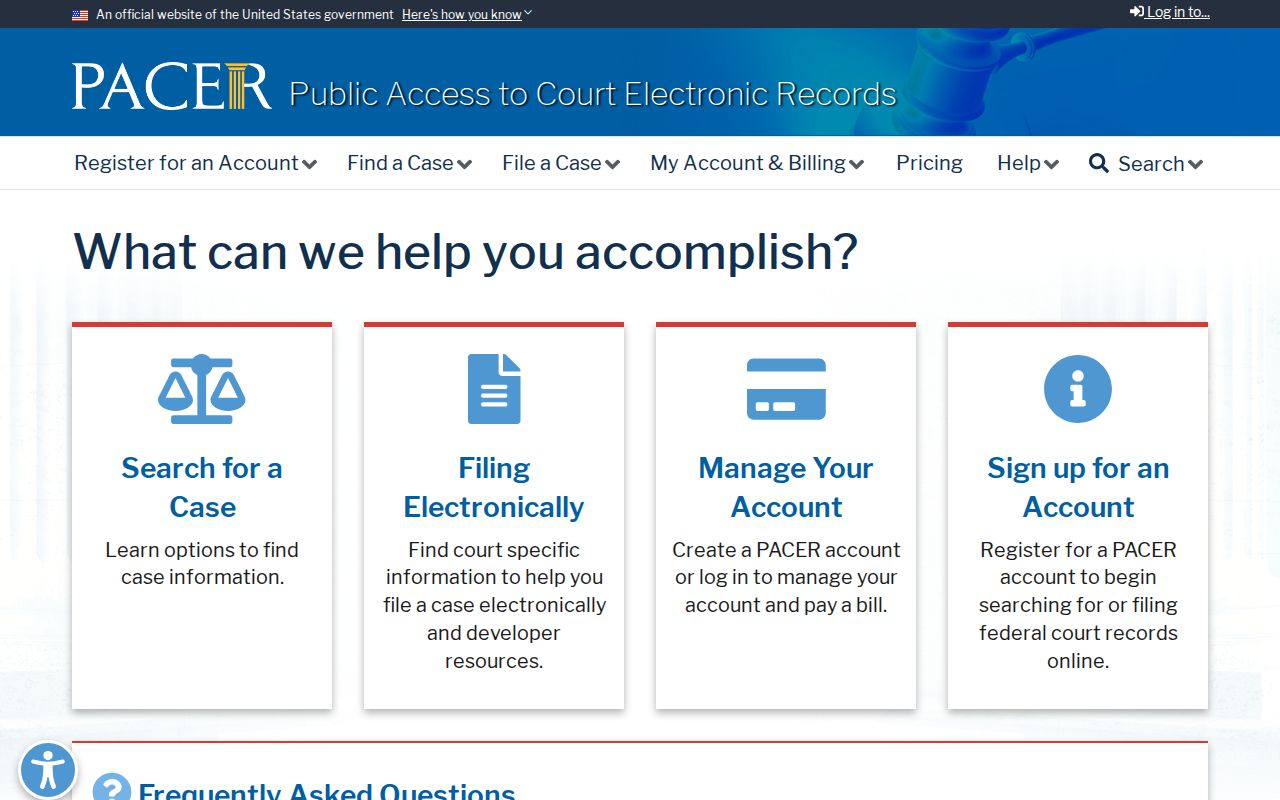
The federal interface should be used only when the matter was filed in U.S. District Court, not as a substitute for a local clerk search.
White Pine Court Files Versus Histories
A court file and a repository history answer different questions. RCCD compiles identity-linked Nevada criminal-justice transactions, but it does not supply the local complaint, motion practice, or full hearing record. The Nevada self-history and challenge hub is for a person's own fingerprint-based statewide record.
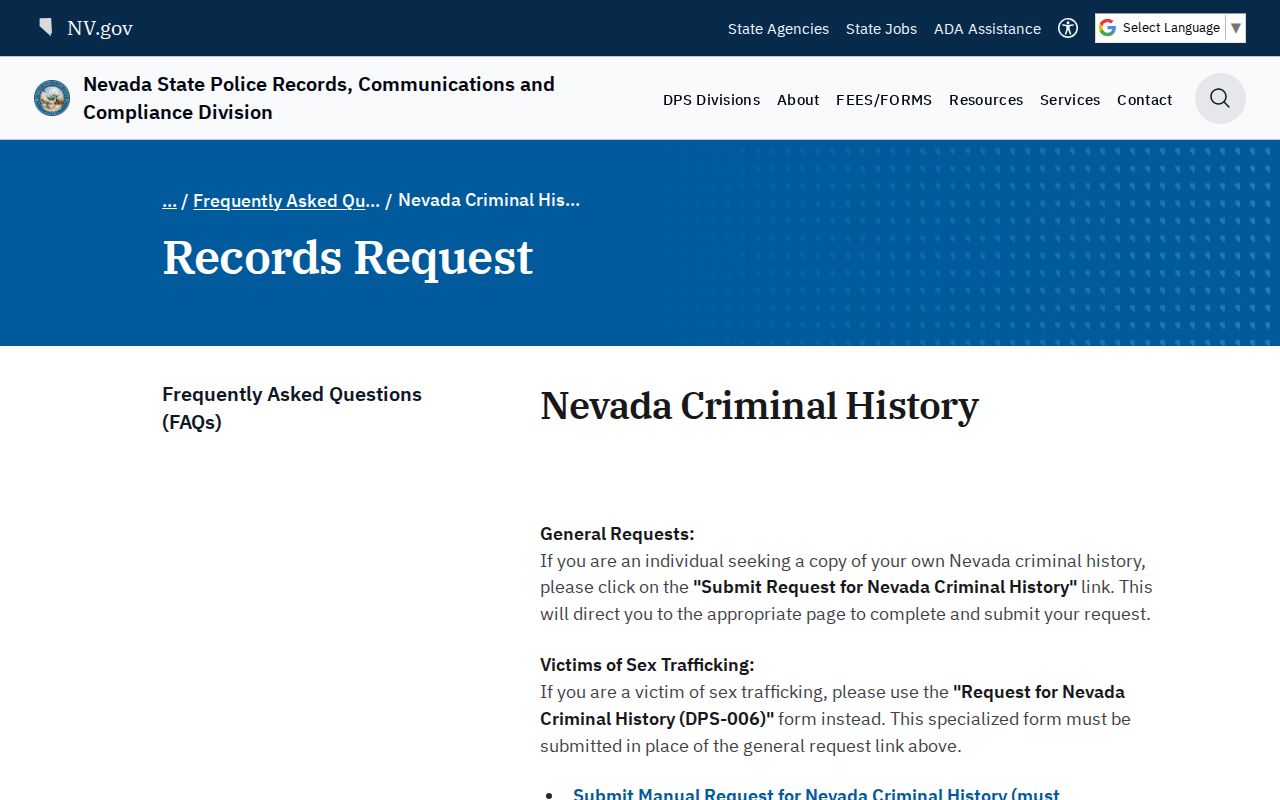
The request hub helps a person inspect or challenge the statewide history, while the White Pine County clerk remains the source for certified case documents.
For a federal self-review, the FBI Identity History Summary portal accepts subject requests and fingerprints.
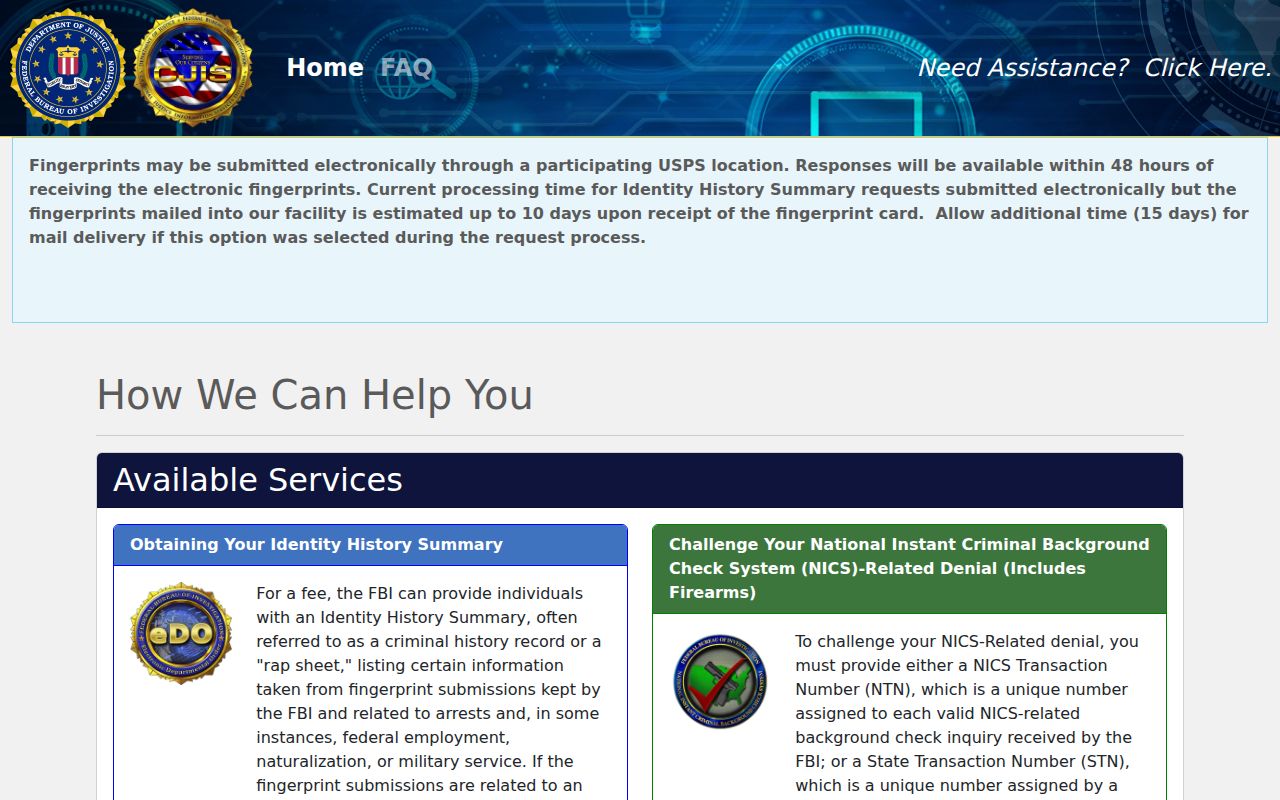
An FBI summary is not a certified White Pine County disposition. Use a case number from the history to seek the judgment from the proper clerk.
White Pine Specialty and Sealed Cases
The Nevada Administrative Office of the Courts lists Adult Drug Court, DUI Court, DUI Diversion Court, and Juvenile Drug Court through the Seventh Judicial District Court. These are supervised court programs, not public criminal-history databases. Docket access can still depend on case type, sealing law, and the particular documents requested.
RCCD's record-sealing and fingerprint form index shows the state-side materials used when a Nevada sealing order must reach the Repository.
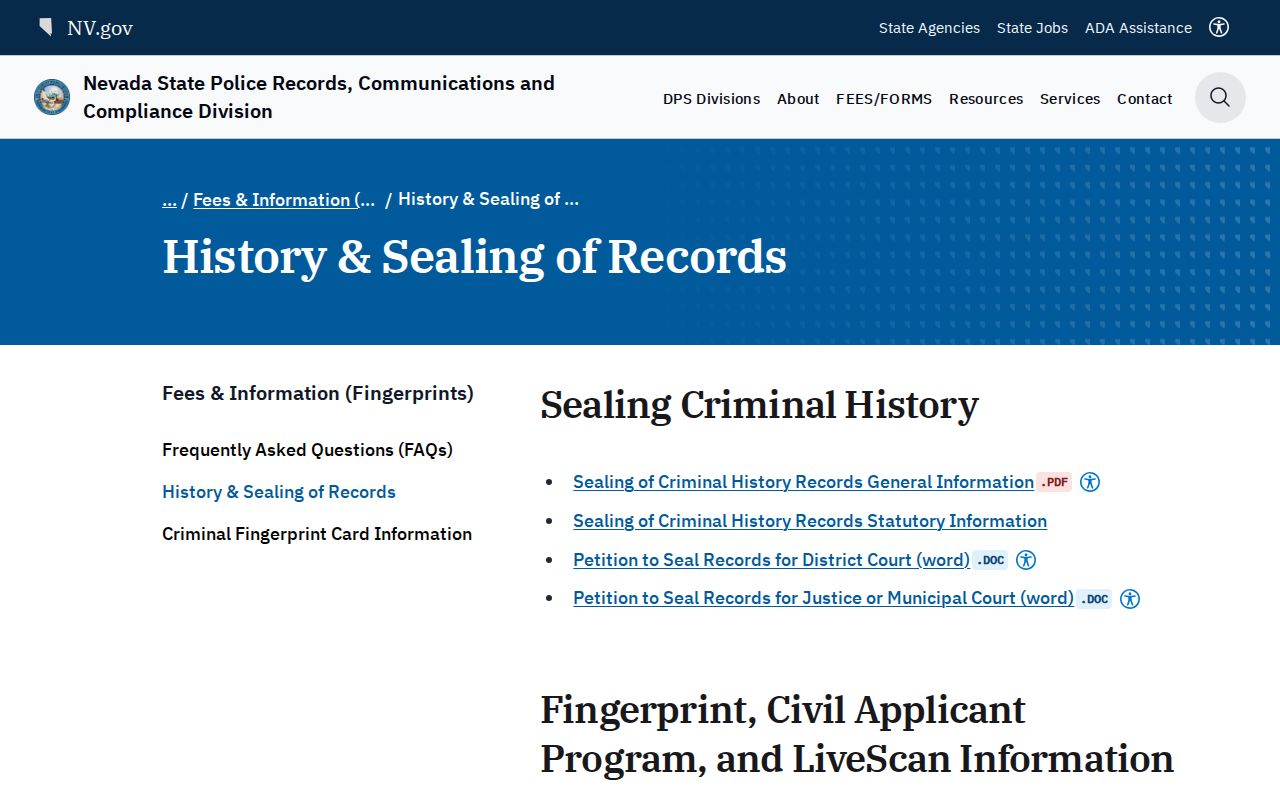
Sealing restricts dissemination but does not destroy the record. The petition belongs in the court of conviction, and a certified order is vital when an agency entry does not update.
Access & Restrictions
Nevada does not treat every item tied to a criminal matter as open. The Nevada Public Records Act governs nonconfidential executive-agency records, while court clerks apply judicial access rules and sealing orders to case files. Active investigative material, juvenile information under NRS 62H, victim and minor identities, personal identifiers, sealed matters, and protected evaluations may be withheld or redacted.
If a White Pine County case cannot be found, recheck the court level, spelling, filing year, and case number. Ask whether an older file is archived or whether the record is restricted. Supply a prior citation or release paper when it names the original venue. A missing online result is especially weak evidence here because no verified local trial-court name portal exists.